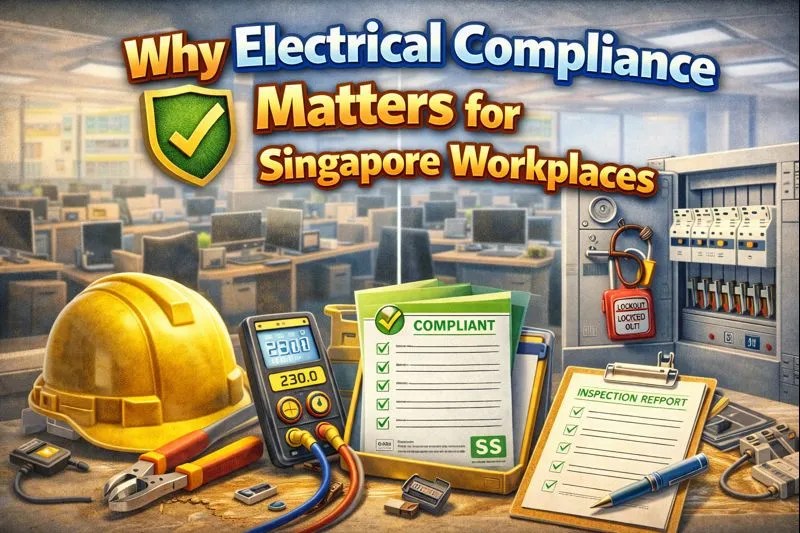
Electrical compliance protects people, property, and operations. Workplaces depend on stable power for lighting, equipment, data systems, and safety tools. Clear rules set how systems get installed, used, and maintained. These rules reduce risk and support steady work. In Singapore, strong standards guide daily practice across offices, factories, retail sites, and shared buildings. The same standards also address Electrical Issues that appear in Singapore Homes, which often share supply paths and building systems with nearby work sites. A direct approach to compliance helps owners prevent faults, avoid downtime, and meet legal duties.
What Electrical Compliance Means in Workplaces
Electrical compliance means meeting set rules for design, installation, testing, and upkeep of electrical systems. These rules define wire sizes, circuit limits, grounding methods, device ratings, and labeling. They also define how often checks must happen and who may perform them. Clear compliance reduces guesswork. Staff know what safe power looks like. Inspectors can verify results with simple checks. Managers gain records that show care and control.
Compliance covers new builds and older sites. New projects follow current codes from the start. Older sites must close gaps found during checks. This approach limits Electrical Issues before they grow. It also aligns with common risks seen in Singapore Homes, such as aging wires, loose outlets, and overloaded circuits. The goal stays the same: safe power that works as planned.
Legal Duties and Local Standards
Workplace owners and operators must meet local standards. These standards define minimum safety levels and outline penalties for failure. Fines, stop-work orders, and legal claims can follow noncompliance. Clear duties help leaders act early by planning upgrades, scheduling tests, and training staff with guidance from a qualified LS Electrician who understands Singapore’s electrical codes and inspection requirements.
Standards also support fair practice across industries. All sites follow the same rules, which creates consistent safety levels in commercial and industrial spaces. Insurers also rely on documented compliance when they assess risk. Records from inspections, testing, and corrective work demonstrate ongoing control. This approach reflects best practice in Singapore homes as well, where verified electrical safety supports property sales, rentals, and insurance claims.
Common Electrical Issues Found in Workplaces
Workplaces face several common Electrical Issues. Overloaded circuits occur when equipment grows but wiring does not. Loose connections cause heat and spark risk. Poor grounding raises shock risk. Damaged cords and plugs fail under daily use. Outdated panels lack modern protection.
These problems also appear in Singapore Homes, especially in older buildings. Shared lessons apply. Regular checks find heat marks, odd smells, and breaker trips. Clear labeling helps staff avoid misuse. Simple fixes reduce risk fast. Compliance sets a routine that keeps these issues from returning.
Overloading and Power Demand Growth
Power demand rises as sites add devices. Servers, chargers, and machines draw steady load. Without review, circuits exceed safe limits. Compliance requires load checks and circuit balance. It also requires correct breaker ratings. These steps cut fire risk and extend equipment life.
Grounding and Bonding Gaps
Grounding directs fault current away from people. Bonding keeps metal parts at the same potential. Gaps in these systems cause shock risk. Compliance rules define grounding paths and test methods. Regular tests confirm low resistance paths that work under fault.
Wear, Damage, and Poor Repairs
Daily movement strains cords and outlets. Temporary fixes fail under load. Compliance rejects poor repairs and sets approved methods. It also limits extension cord use. Clear rules push sites to install fixed outlets where needed.
How Compliance Reduces Fire and Injury Risk
Electrical faults rank among leading fire causes. Heat from resistance, sparks from loose joints, and arcs from damaged insulation start fires. Compliance cuts these triggers. It enforces correct materials, spacing, and protection devices.
Protection devices matter. Circuit breakers, residual current devices, and surge protection act fast. They shut power when faults appear. Compliance ensures these devices match circuit needs and receive tests. Injury risk drops when shock paths get blocked and fault time stays short.
The same logic applies to Singapore Homes. Homes that follow checks see fewer fires and shocks. Workplaces gain even more due to higher loads and staff counts.
Productivity, Downtime, and Cost Control
Stable power supports steady work. Faults cause stoppages, data loss, and equipment damage. Compliance lowers unplanned outages. Planned checks find issues during low-use hours. Repairs cost less than emergency fixes.
Insurance costs also link to compliance. Insurers favor sites with records and tests. Claims process faster with proof of care. Over time, these savings add up. This cost control approach mirrors advice given for Singapore Homes, where preventive checks cost less than fire damage.
Inspection, Testing, and Maintenance Cycles
Compliance sets cycles for inspection and testing. Visual checks find wear. Instrument tests confirm insulation, grounding, and device trip times. Maintenance fixes issues found. Records track results and dates.
Clear cycles help managers plan. They assign roles and set dates. Staff learn to report signs early. This system turns safety into routine work. It also supports audits with clear proof.
Visual Checks and Staff Reporting
Visual checks catch early signs. Heat marks, loose covers, and noise signal risk. Staff training helps. Simple reporting paths speed action. Compliance supports this by defining what to check and how to log it.
Instrument Testing and Proof
Instrument tests give numbers. They show resistance, continuity, and trip times. These results remove doubt. They also guide repair scope. Compliance requires certified testers and clear reports.
Training and Responsibility
People play a key role. Compliance assigns responsibility to owners, managers, and qualified workers. Training explains safe use, limits, and reporting. Clear roles prevent gaps.
Staff learn not to overload outlets. They learn to avoid damaged cords. They know who to call. This culture reduces Electrical Issues fast. The same training themes apply in Singapore Homes, where residents learn safe use and early signs.
Electrical Compliance During Renovations and Expansions
Changes raise risk. New layouts change loads and routes. Temporary power adds strain. Compliance requires review before work starts. Plans show loads, routes, and protection. Inspections confirm results.
This approach prevents hidden faults. It also avoids rework. For mixed-use buildings, this matters more. Workplaces and Singapore Homes may share risers and meters. One change can affect many users.
Technology, Monitoring, and Data
Modern sites use monitoring to track power use and faults. Sensors show load trends and heat. Alerts flag issues early. Compliance supports approved devices and data use.
Data guides upgrades. Managers see where to add circuits or balance loads. This reduces stress on systems. Similar tools now appear in Singapore Homes through smart panels and meters.
Emergency Response and Continuity
Compliance plans include response steps. Clear labels speed shutdown. Access paths stay clear. Backup power supports exits, alarms, and key systems. Drills test response.
These steps protect life first. They also protect assets. Clear plans reduce panic and error. Homes benefit from similar planning with labeled panels and tested devices.
Environmental and Energy Benefits
Safe systems run efficient. Correct sizing cuts losses. Balanced loads reduce heat. Compliance supports energy goals by limiting waste. This lowers bills and emissions.
Workplaces that track use can cut peaks. Homes follow similar steps with efficient devices and circuits. The link between safety and efficiency stays clear.
Records, Audits, and Continuous Improvement
Records show what happened and when. Audits review gaps and progress. Compliance treats audits as checks, not threats. Findings guide updates.
Continuous improvement keeps pace with use changes. It also aligns with lessons from Electrical Issues seen in Singapore Homes, where aging stock needs steady review. The result is a system that stays safe and useful.
Choosing Qualified Support
Qualified workers bring skill and accountability. Compliance requires proper licenses and scope. This protects owners and staff. Clear contracts define tests, reports, and fixes.
Quality work lasts longer. It also passes inspection with ease. The same rule applies to homes, where qualified help prevents repeat faults.
Conclusion
Electrical compliance matters because it protects people, keeps work running, and controls cost. Clear rules reduce Electrical Issues across workplaces and Singapore Homes alike. Regular checks, trained staff, proper records, and planned upgrades form a simple system that works. By following these steps, workplaces gain safe power today and steady operation tomorrow.
 People Speak