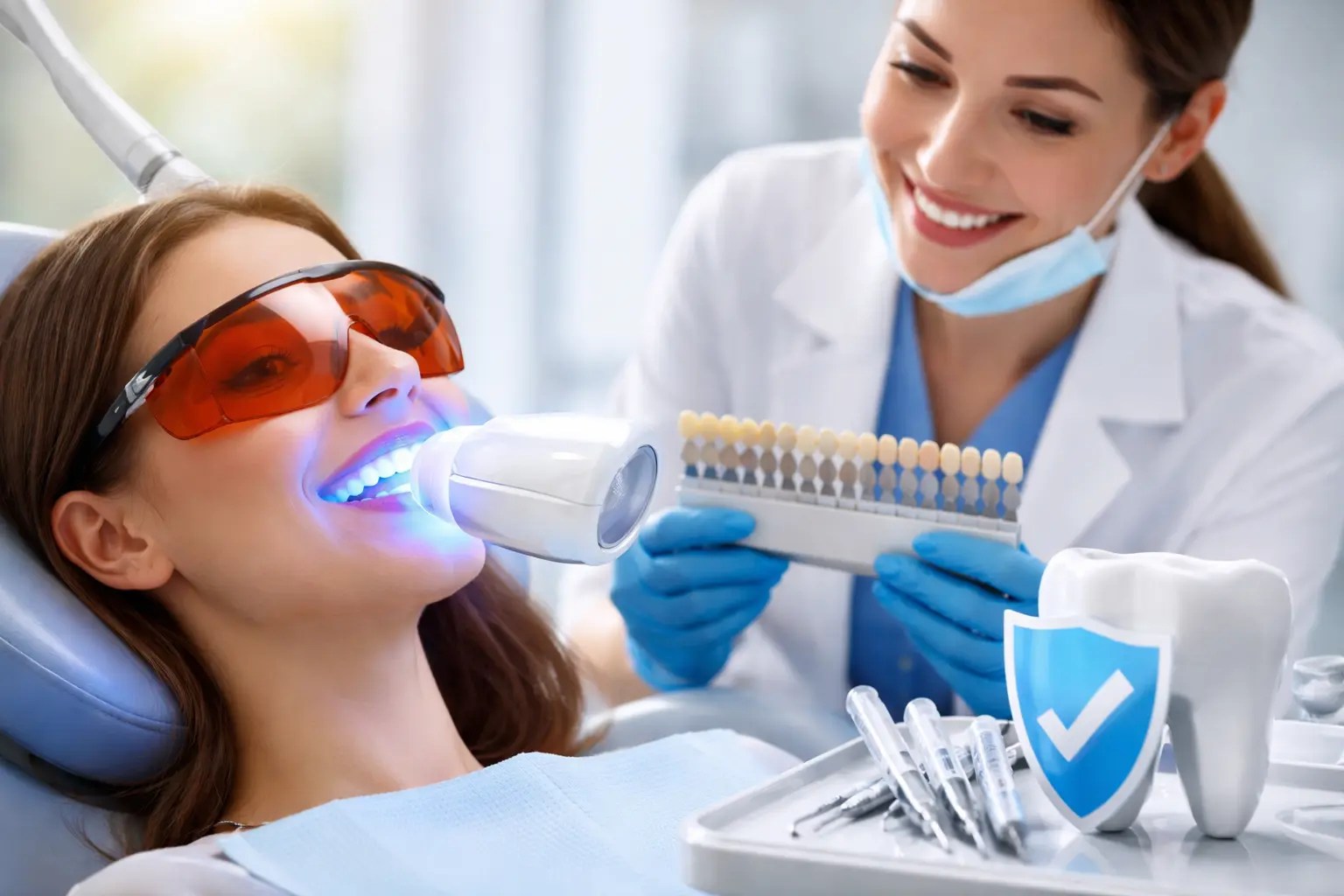
Whitening improves the colour of teeth by reducing stains on the enamel and dentine. Many people choose Whitening to improve their smile and boost confidence. However, Whitening also affects Oral Health. The process changes the chemical structure of surface stains and can affect tooth sensitivity and gum condition. For this reason, a dentist should supervise the procedure.
Supervised Whitening supports safe dental care. A dentist checks the teeth and gums before treatment. The dentist identifies decay, cracks, worn enamel, and gum disease. These conditions increase Oral Health Risks if a person uses Whitening products without guidance. Professional supervision reduces these risks and protects long-term Oral Health.
This article explains how supervised Whitening lowers Oral Health Risks. It also explains why professional dental care creates better outcomes than unsupervised methods.
How Whitening Works on Teeth
Whitening treatments use peroxide-based gels designed specifically for safe and controlled teeth whitening procedures. These gels typically contain hydrogen peroxide or carbamide peroxide, which penetrate the enamel and break down stain molecules embedded within the tooth structure. Through a chemical reaction, the stains become smaller and lighter, resulting in a noticeably brighter smile.
Teeth are made up of enamel on the outside and dentine beneath it. Enamel acts as a protective layer for the inner structure of the tooth. When enamel is thin or worn, whitening agents may reach the dentine more easily, which can increase the likelihood of sensitivity or mild irritation.
A dentist carefully controls both the concentration of the whitening gel and the duration of its application. This measured approach helps minimise potential damage to enamel and gums. With proper assessment and monitoring, tooth colour can be improved while maintaining overall oral health and comfort.
Common Oral Health Risks Linked to Unsupervised Whitening
Unsupervised Whitening increases Oral Health Risks. Many over-the-counter kits contain high levels of peroxide. Some products lack clear instructions. Incorrect use can damage teeth and gums.
Tooth Sensitivity
Tooth sensitivity is a common side effect of Whitening. Peroxide can pass through enamel and irritate the pulp inside the tooth. The pulp contains nerves and blood vessels. Irritation causes sharp pain when a person eats or drinks hot or cold items.
Without supervision, people may apply gel too often. They may also use products for longer than recommended. This behaviour increases Oral Health Risks and leads to ongoing discomfort.
Gum Irritation
Whitening gel can irritate soft tissue. If gel touches the gums, it can cause redness, swelling, and burning. Poorly fitted trays increase this risk. Many home kits include generic trays that do not match the shape of the teeth.
A dentist creates custom trays for Whitening. These trays fit closely around the teeth and reduce contact with the gums. This approach supports safe dental care and protects Oral Health.
Enamel Damage
Frequent or incorrect Whitening can weaken enamel. Enamel does not regenerate. If enamel erodes, the tooth becomes more vulnerable to decay. Enamel damage increases Oral Health Risks over time.
Supervised Whitening includes regular checks. A dentist monitors enamel strength and stops treatment if needed. This action reduces long-term harm.
The Role of Dental Assessment Before Whitening
A dental assessment is the first step in supervised Whitening. The dentist examines teeth and gums. The dentist may take X-rays to detect hidden decay or infection.
If a patient has untreated cavities, the dentist treats them before Whitening. If the patient has gum disease, the dentist manages the condition first. Active disease increases Oral Health Risks during Whitening.
The dentist also evaluates existing dental work. Fillings, crowns, and veneers do not change colour during Whitening. The dentist explains how this difference may affect appearance. This clear planning improves patient satisfaction and supports better dental care.
Customised Whitening Plans Improve Safety
Every patient has different Oral Health needs. Some patients have sensitive teeth. Some patients have thin enamel. Others may grind their teeth at night. A dentist considers these factors before starting Whitening.
Supervised Whitening allows the dentist to adjust gel strength. The dentist may choose a lower peroxide level for sensitive patients. The dentist may also shorten treatment time. These adjustments reduce Oral Health Risks and maintain comfort.
In contrast, store-bought kits do not adapt to individual needs. These kits apply the same formula to all users. This lack of personalisation increases the chance of side effects.
Monitoring During the Whitening Process
Monitoring is essential during Whitening. A dentist checks progress at regular intervals. The dentist looks for signs of irritation, enamel wear, and gum inflammation.
If the patient reports pain, the dentist can pause treatment. The dentist may recommend desensitising toothpaste or fluoride treatment. Fluoride strengthens enamel and lowers sensitivity. This support reduces Oral Health Risks and improves the safety of Whitening.
Professional monitoring also ensures even results. Uneven Whitening may indicate underlying problems. The dentist can correct the issue before it becomes severe.
Professional Whitening Methods in Dental Care
Dentists offer different supervised Whitening options. These options include in-chair Whitening and take-home kits with custom trays.
In-Chair Whitening
In-chair Whitening occurs at the dental clinic. The dentist applies a protective barrier to the gums. The dentist then applies a controlled peroxide gel to the teeth. Some systems use light activation to speed up the process.
The dentist observes the patient during the procedure. This close supervision limits Oral Health Risks. The dentist removes the gel at the correct time and checks for irritation.
Take-Home Professional Kits
Dentists also provide take-home kits with custom trays. The dentist gives clear instructions about application time and frequency. The dentist schedules follow-up visits to assess progress.
This method offers flexibility while maintaining professional oversight. It combines convenience with safe dental care. As a result, it lowers Oral Health Risks compared to unsupervised kits.
The Link Between Whitening and Preventive Dental Care
Supervised Whitening often encourages better dental care habits. Patients who invest in Whitening tend to maintain their results. They brush and floss regularly. They attend dental check-ups more often.
Regular check-ups allow early detection of decay and gum disease. Early treatment reduces Oral Health Risks. In this way, supervised Whitening can support overall Oral Health improvement.
Dentists also provide advice on diet and lifestyle. They may suggest limiting coffee, tea, and red wine. These drinks cause staining. They may also advise patients to stop smoking. Smoking increases stain build-up and gum disease risk.
Psychological Benefits and Their Impact on Oral Health
A brighter smile can improve self-esteem. Higher confidence may encourage people to smile more and speak freely. This change can improve social interaction and mental well-being.
Improved confidence can also motivate consistent dental care. Patients who value their smile often protect it. They follow professional advice and avoid harmful habits. This behaviour reduces Oral Health Risks in the long term.
Although Whitening focuses on appearance, supervised treatment supports both cosmetic and health goals. The dentist ensures that Oral Health remains stable during the process.
Long-Term Outcomes of Supervised Whitening
Supervised Whitening produces controlled and predictable results. The dentist records the initial tooth shade and tracks improvement. This documentation helps measure progress accurately.
Because the dentist protects enamel and gums, long-term damage is rare. Patients receive guidance on maintenance. The dentist may suggest periodic touch-up treatments under supervision. This approach keeps teeth bright without increasing Oral Health Risks.
Unsupervised Whitening may create short-term colour change. However, it may also lead to sensitivity, enamel erosion, or gum injury. These problems can require further dental care and extra cost.
Supervised Whitening reduces these risks. It combines safe practice, clinical knowledge, and ongoing support. This structure protects Oral Health while achieving visible results.
Conclusion
Whitening improves tooth colour by breaking down stains. However, the process can affect enamel and soft tissue. Unsupervised use of Whitening products increases Oral Health Risks such as sensitivity, gum irritation, and enamel damage.
Supervised Whitening reduces these risks. A dentist performs a full assessment before treatment. The dentist adjusts the plan based on individual needs. The dentist monitors progress and manages side effects. This professional approach supports safe dental care and long-term Oral Health.
Patients who choose supervised Whitening protect both their smile and their health. Professional guidance ensures effective results with minimal risk. In this way, supervised Whitening remains the safest option for improving tooth colour while maintaining strong Oral Health.
 People Speak