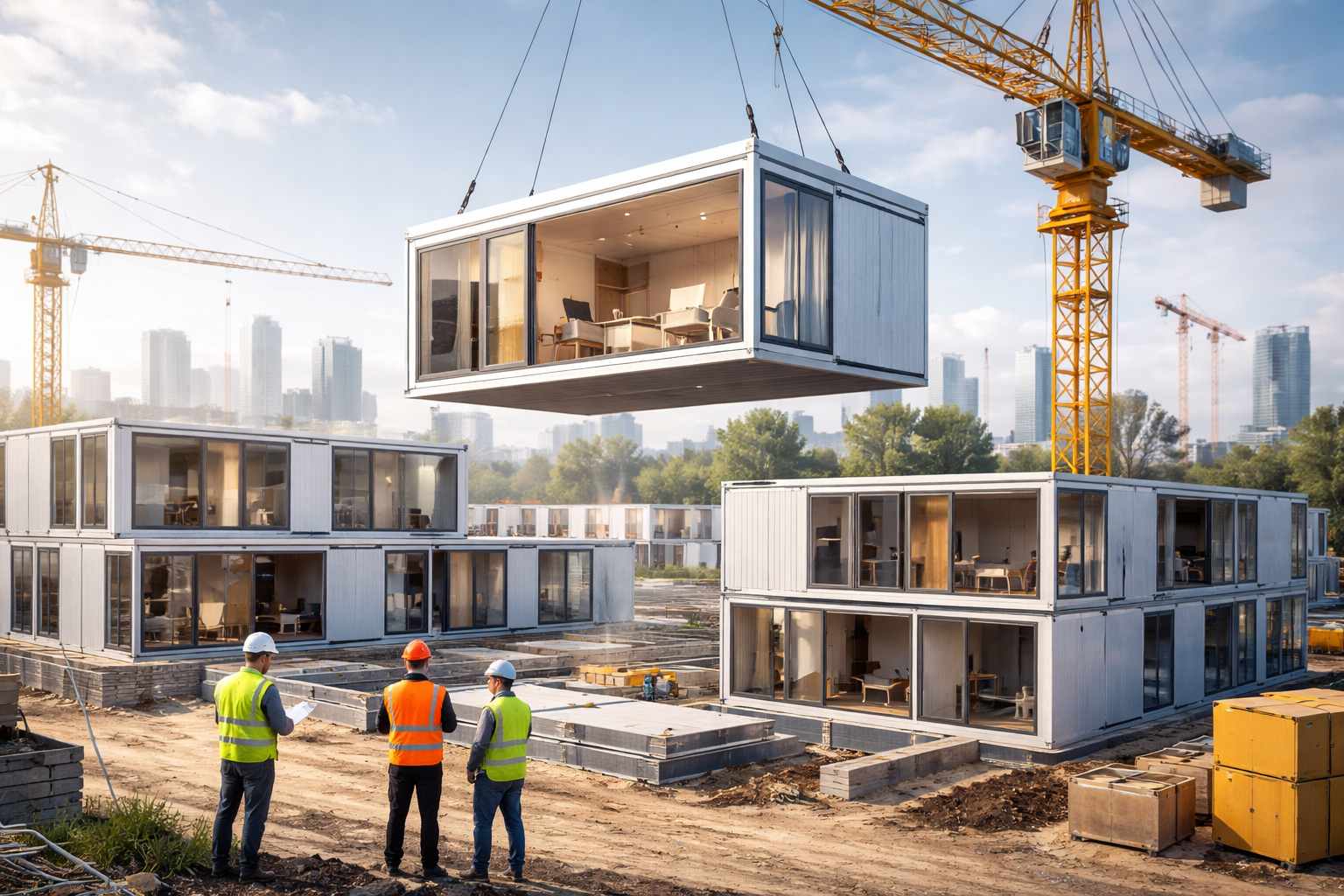
Modular construction is a building method that uses pre-made sections called modules. Workers produce these modules in a factory and then transport them to the project site. Teams connect the modules to create a complete structure. This method changes how companies build factories, offices, hospitals, and housing units. Modern industry prefers systems that improve speed, quality, and cost control. Modular construction supports these needs because it allows construction teams to build structures in a controlled environment and complete projects faster.
Modern industry often faces pressure to finish projects quickly while maintaining safety and quality. Traditional construction methods depend heavily on weather conditions and on-site labor. Modular construction reduces these challenges. Factories produce modules under controlled conditions, which improves accuracy and reduces delays. As a result, many industries now choose modular construction to complete projects on schedule and within budget.
What Is Modular Construction
Modular construction is a process where manufacturers create building components in a factory. Each component forms a part of the final structure. Workers assemble these parts at the construction site to complete the building. Each module can include walls, floors, ceilings, electrical systems, plumbing, and interior finishes.
This process divides a building into manageable sections. Construction teams transport the sections to the project site after factory production. Cranes lift the modules into position, and workers connect them to form the final structure. This method allows multiple tasks to occur at the same time. Factory teams produce modules while site teams prepare the foundation. This parallel workflow shortens the project timeline.
The Role of Modular Construction in Modern Industry
Modern industry requires efficient infrastructure. Companies need factories, warehouses, offices, and service buildings that support production and logistics. Modular construction helps businesses meet these demands quickly. Manufacturers can produce building modules while companies prepare equipment and operations. Many industrial planners also consult experienced engineering partners to ensure that modular structures meet mechanical, safety, and performance standards. In Ireland and across Europe, companies often look to firms such as Radley Engineering when evaluating reliable mechanical engineering expertise that supports modern industrial facility development.
Industries such as manufacturing, healthcare, education, and energy use modular construction to expand facilities. For example, a manufacturing company may need a new production unit quickly to meet market demand. Modular construction allows the company to install a new facility within weeks instead of several months. This rapid installation helps companies maintain productivity and avoid long delays.
Speed of Construction
Speed is one of the main reasons modular construction is popular in modern industry. Factory production allows teams to complete building components faster than traditional site construction. Workers follow standard procedures and use specialized tools inside the factory environment. These conditions increase efficiency and reduce production time.
Traditional construction requires workers to build every part of the structure at the site. Weather conditions, supply delays, and labor shortages can slow the process. Modular construction reduces these risks because factory teams complete most tasks before modules reach the site.
For example, a modular building project may finish 30 to 50 percent faster than a traditional construction project. This faster timeline helps companies begin operations sooner. Early operation often leads to faster return on investment, which attracts businesses to modular construction.
Cost Efficiency in Modern Industry
Cost control is a major factor for companies in modern industry. Businesses must manage budgets carefully while maintaining building quality. Modular construction helps reduce costs through efficient production and reduced waste.
Factory production uses precise measurements and standard processes. These processes limit material waste and improve resource management. Construction teams also need fewer workers at the project site because much of the work occurs in the factory.
Transportation and installation also follow planned procedures. This planning reduces unexpected expenses that often occur in traditional construction projects. As a result, companies can predict project costs more accurately when they use modular construction.
Another financial benefit comes from shorter project timelines. When companies complete buildings faster, they begin operations earlier. Early operation increases revenue and reduces the financial burden of long construction periods.
Quality Control in Factory Production
Quality control plays a critical role in modern industry. Companies require buildings that meet strict safety and performance standards. Modular construction supports strong quality control because production occurs in a controlled factory environment.
Factory teams follow consistent procedures and inspection processes. Supervisors check each module during production. These inspections ensure that electrical systems, plumbing, insulation, and structural elements meet design requirements.
In traditional construction, weather and site conditions can affect quality. Rain, wind, or temperature changes may interfere with construction tasks. Factory production protects materials and components from these external factors. This protection improves durability and consistency in the final building.
Higher quality also reduces maintenance costs after project completion. Companies prefer buildings that require fewer repairs because maintenance interruptions can affect business operations.
Improved Safety in Construction Projects
Safety is a major concern in modern industry. Construction sites contain many hazards, including heavy equipment, unstable structures, and environmental risks. Modular construction improves safety because workers perform most tasks in a factory environment.
Factories provide stable work conditions and organized workspaces. Workers use fixed platforms and equipment that reduce the risk of accidents. Supervisors also monitor safety procedures closely within the factory setting.
At the project site, installation teams assemble completed modules instead of constructing every part from the ground up. This process reduces the time workers spend in potentially dangerous conditions. Fewer on-site tasks mean fewer safety risks during construction.
Improved safety benefits both workers and companies. Businesses avoid delays, legal issues, and financial losses that may occur after workplace accidents.
Environmental Benefits of Modular Construction
Environmental responsibility is important in modern industry. Many companies now aim to reduce energy use, waste, and pollution. Modular construction supports these goals through efficient production methods.
Factory production reduces material waste because workers cut materials with precise measurements. Manufacturers can reuse leftover materials for other modules. This process decreases the amount of construction waste sent to landfills.
Transportation efficiency also improves because modules travel in planned shipments. Construction teams deliver materials in large sections instead of sending many small shipments. This approach reduces fuel use and transportation emissions.
Many modular buildings also include energy-efficient designs. Manufacturers often install insulation, windows, and energy systems during factory production. These features improve energy performance after installation.
As a result, modular construction supports sustainable development goals in modern industry.
Flexibility and Scalability for Business Growth
Businesses in modern industry must adapt to market changes. Companies may expand production lines, increase staff numbers, or introduce new services. Modular construction allows companies to modify buildings without major structural changes.
A company can expand a facility by adding new modules to the existing structure. Construction teams connect these modules to the original building with minimal disruption. This process allows businesses to grow without closing operations.
Companies can also relocate modular buildings if necessary. Workers can dismantle modules and transport them to a new site. This mobility provides an advantage for industries that require temporary or mobile infrastructure.
Flexibility makes modular construction an attractive option for industries that operate in fast-changing markets.
Applications of Modular Construction in Modern Industry
Many sectors in modern industry now use modular construction for different types of facilities. Manufacturing companies use modular buildings for production units and storage facilities. These buildings support quick expansion of industrial operations.
Healthcare organizations use modular construction to build clinics, laboratories, and temporary medical centers. This method allows healthcare providers to respond quickly to growing patient demand.
Educational institutions also adopt modular buildings for classrooms, training centers, and research labs. Schools and universities can install new learning spaces within short timeframes.
The energy sector uses modular construction to build control rooms, worker housing, and service facilities near project sites. This approach helps energy companies maintain efficient operations in remote locations.
These applications demonstrate how modular construction supports many sectors across modern industry.
Future Growth of Modular Construction
The demand for modular construction continues to grow in modern industry. Advances in manufacturing technology improve the precision and efficiency of module production. Digital design tools also help engineers create accurate building plans before production begins.
Automation and robotics now assist factory teams during module assembly. These technologies increase production speed and reduce human error. As technology continues to develop, modular construction will likely become even more efficient and widely adopted.
Urban growth and industrial expansion will also increase demand for faster building solutions. Companies will continue to seek construction methods that reduce delays and support rapid development. Modular construction offers a practical solution for these needs.
For these reasons, experts expect modular construction to play a major role in the future of modern industry.
Conclusion
Modular construction has become a key building method in modern industry. This approach allows companies to produce building modules in factories and assemble them at project sites. The process improves speed, cost control, quality, safety, and environmental performance.
Businesses benefit from faster project completion and predictable costs. Workers benefit from safer construction conditions. The environment benefits from reduced waste and improved energy efficiency.
Modern industry requires flexible infrastructure that supports rapid growth and changing market demands. Modular construction provides this flexibility through scalable building systems. As technology and manufacturing methods continue to improve, modular construction will remain an important solution for industrial development.
 People Speak